By Sr. Martha Ann Kirk, CCVI
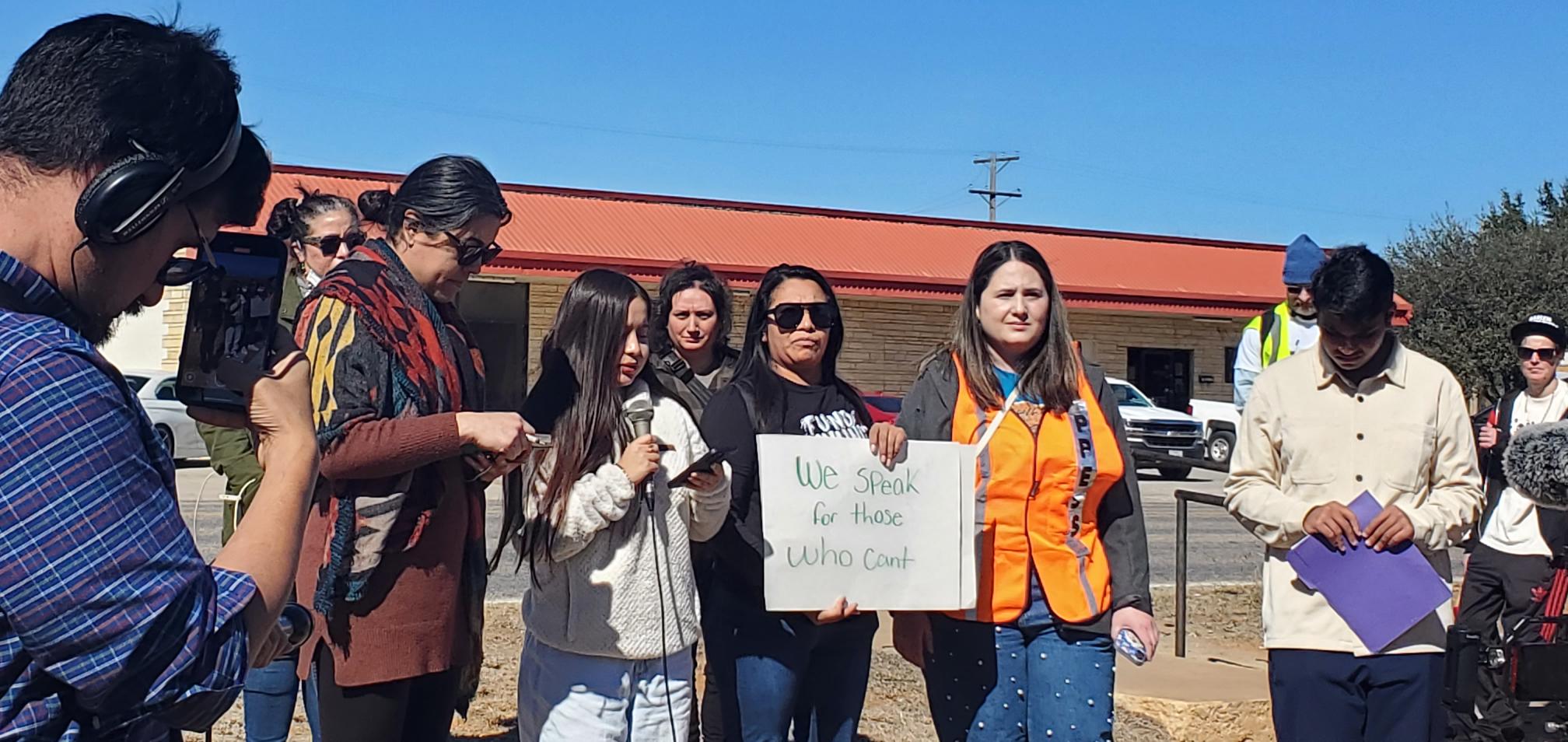
Candy, a lovely 13-year-old girl spoke of the trauma she feels when a dog comes near. When she was 3 years old she and her mother were in a detention center and the guards had frightening dogs.
Ayaan Moledina, a 17-year-old student and a Muslim touched my heart as he said, “We are raising a generation of children that are immune to all this hatred, who think it’s okay to discriminate against their peers because they see leaders in power doing the same thing. But I know that if those people had to live in the shoes of someone like me for just one day, they would understand. The world looks at people like me and Liam Conejo Ramos differently because of the color of our skin and where we’re from. My parents came to this country from Pakistan as teenagers to pursue the American dream, to build a better life, to get a quality education, and to create a strong foundation for their children. The foundation they built for my community is being torn down by the country they pledged their loyalty to.”
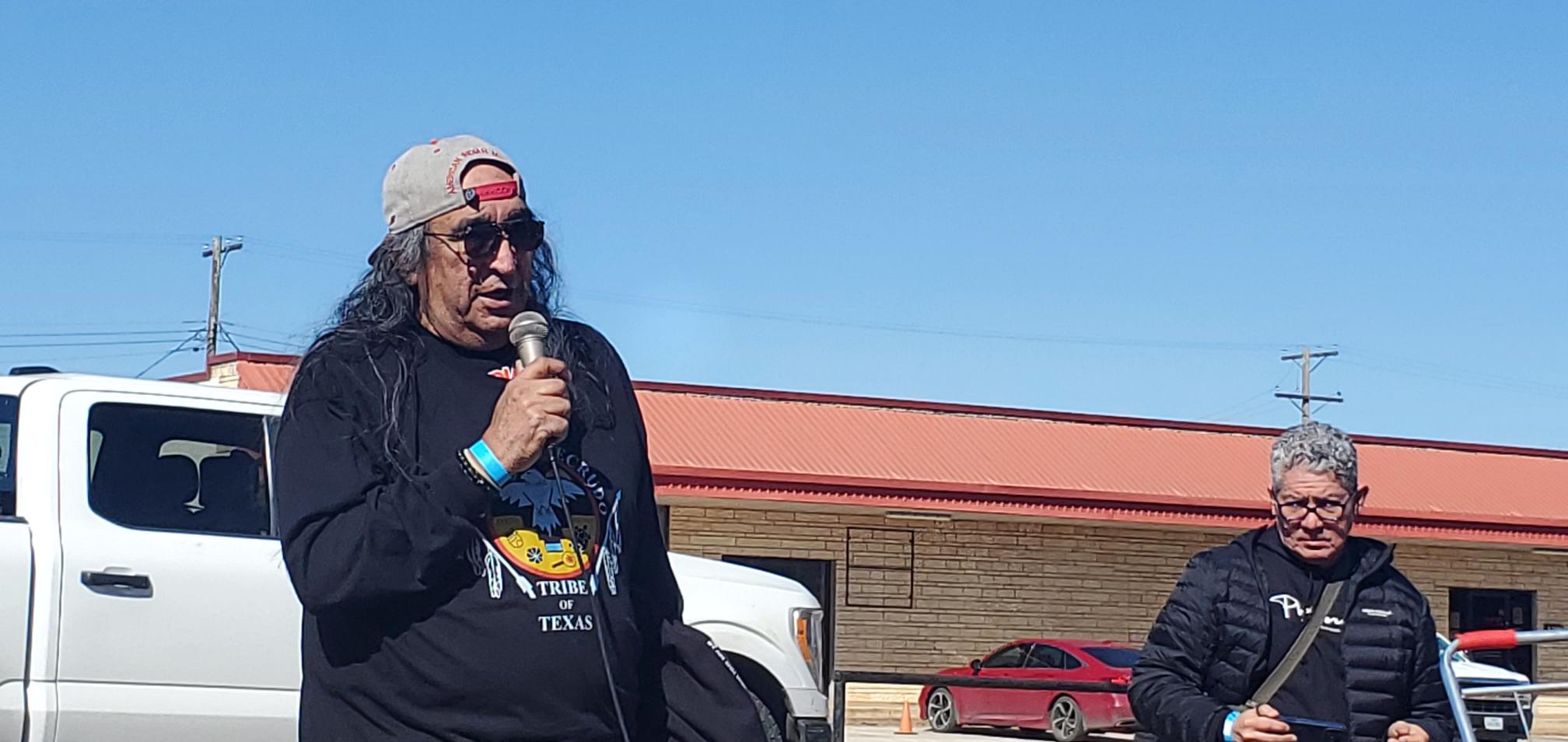
An indigenous leader spoke of land where his people lived for thousands of years and then said, “No one is illegal coming into this land which was stolen.”
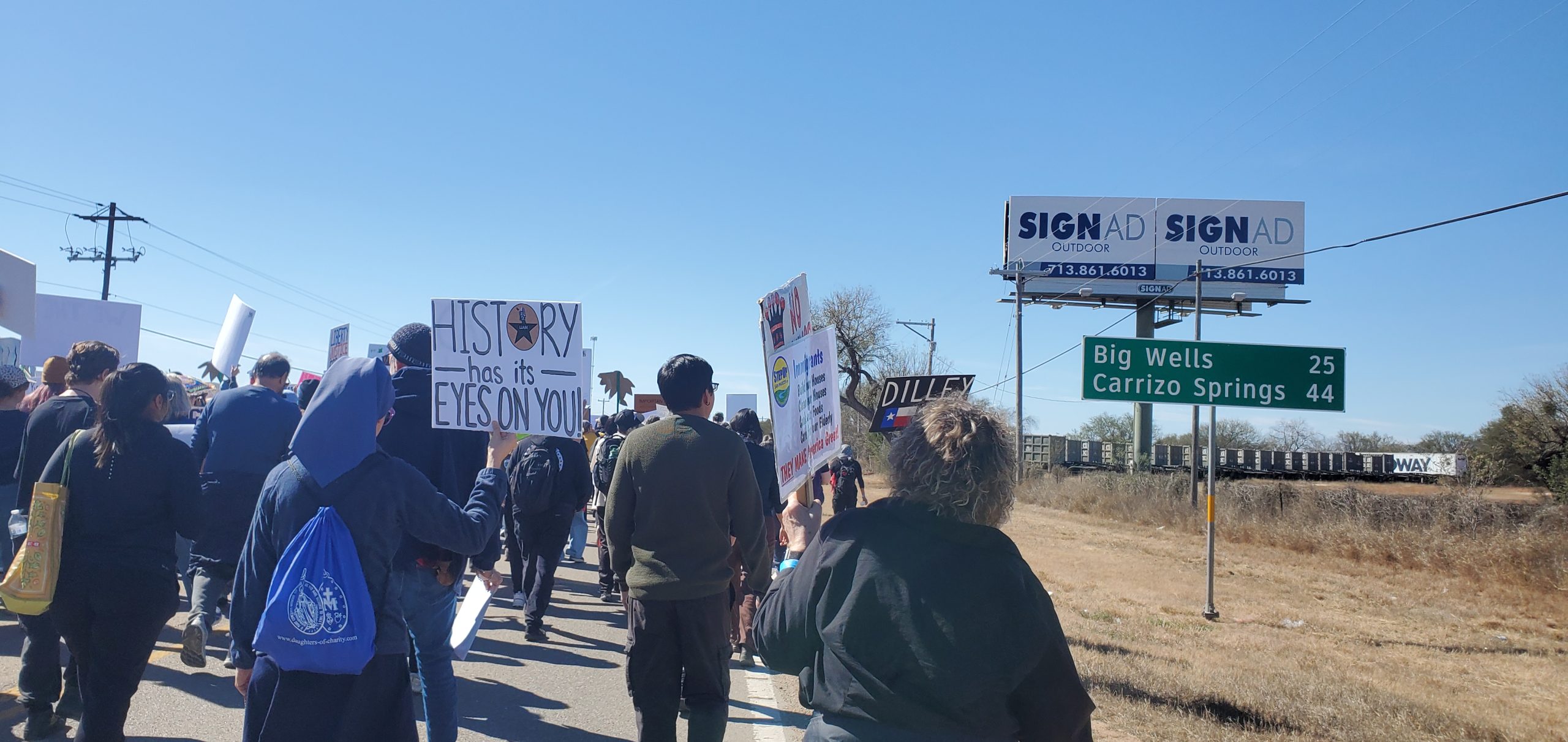
Candy, Ayaan, and the indigenous leader spoke to about 350 of us gathered in a park in Dilley, Texas. January 25, 2026, we were preparing to walk about two miles to the South Texas Family Residential Center, to draw attention to Liam Adrian Conejo Ramos, 5 years old, and his father, Adrian Alexander Conejo Arias, who had been detained the week before by ICE officials in Minnesota and transferred to Texas.
That is the largest immigrant detention center in the United States and has a capacity of 2,400. It is intended to detain mainly women and children from Central America. While Minnesota is getting more attention in the news, the largest number of detained people are in Texas.
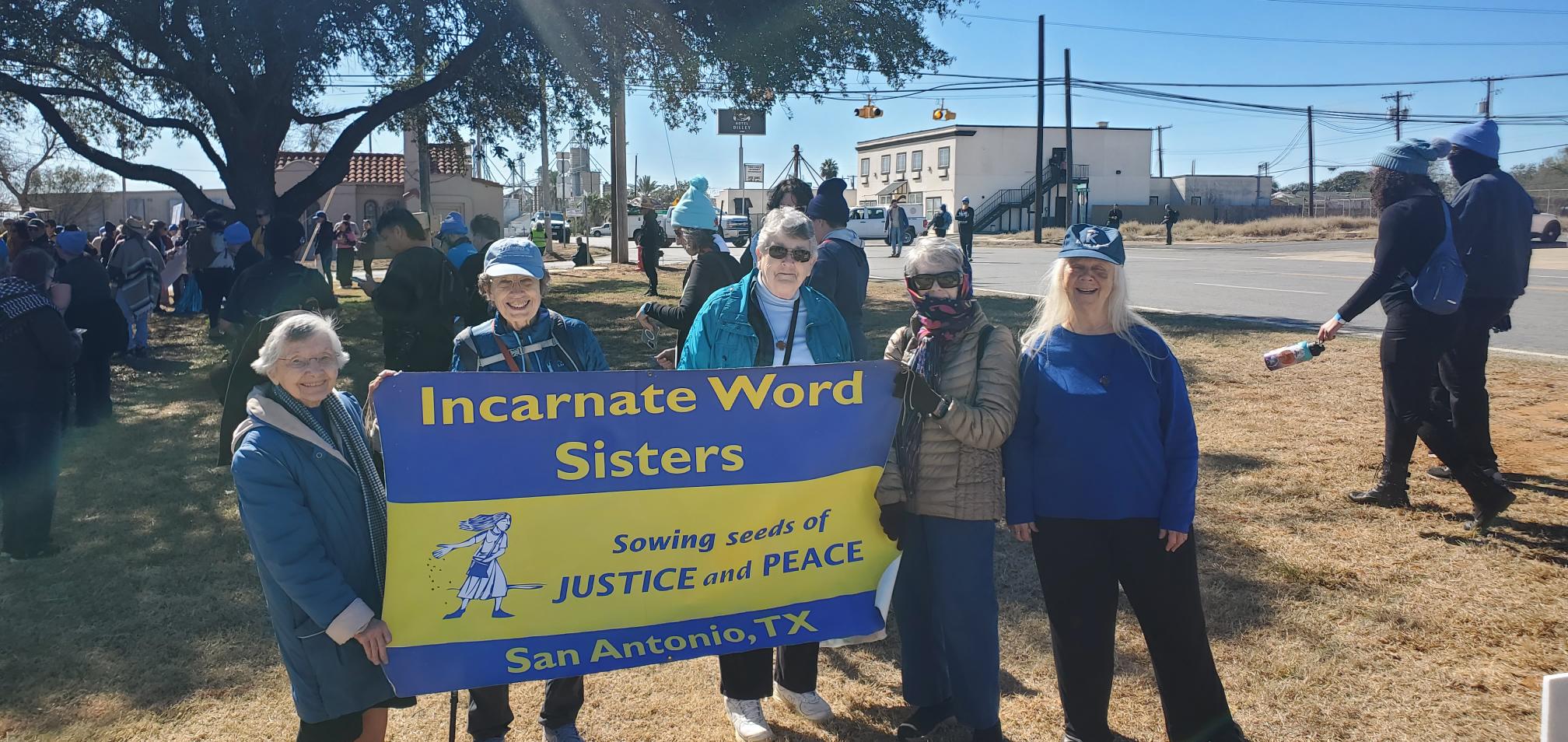
Sisters of Charity of the Incarnate Word Jean Durel, Josetta Eveler, Michele O’Brien, Margaret Snyder, and I were part of the Libertad Vigil and Procession. Sr. Michele noted that we were people from many places, ages, nationalities, and colors together. We were saying to all through the media that it is wrong that the US government is holding and treating people in this manner. These women and children have committed no crime. They are seeking a better life. As one sign said, “Do you cage your children?” Most of us came to be seen by the children, to let them know they are not alone or forgotten. Sr. Josetta, the elder among us, said that she was very happy that she had the opportunity to participate and that she was physically able to do so.
The Texas Unitarian Universalist Justice Ministry led by Rev. Erin Walter started to organize the vigil when they found out that U.S. Rep. Joaquin Castro from San Antonio and U.S. Rep. Jasmine Crockett of Dallas were going to be visiting there. In only three days this successful and touching gathering was put together. Many clergy and faith leaders, a Franciscan, Protestant ministers, our Incarnate Word Sisters, Sister of the Holy Spirit, and Daughters of Charity participated. A woman from Dilley asked us not to call the government facility the Dilley Detention Center. The people of Dilley with many of their churches hosting us, did not want for us to think of them as the people behind what was going on at the detention center.
The Libertad Vigil and the U.S. Representatives seemed to have grabbed the attention and sympathy of the U.S. people enough for the judiciary to act. Liam and his father have not been departed to Ecuador and they have been returned to Minnesota, but what about the thousands of other children in detention?
The Flores settlement from 1997 has been the legal agreement for protecting children in Immigrant detention. It says that their basic needs should be met and that a child should not be held in custody for more than 20 days.
The Marshall Project of Immigration and Customs Enforcement found that the current administration’s revival of family detention has taken thousands of children into custody. At least 20 infants and 3,800 children under 18 years old have been taken since the U.S. president came into office. See the Deportation Data Project. Over 1,300 children have been in detention over 20 days according to the Marshall Project’s analysis. ICE Detainees Include More Than 3,800 Children So Far This Year. People who have valid legal claims to remain in the U.S. often get so discouraged in detention with few legal resources and bad living conditions that they leave our country.
In 2018, I helped host a panel of health care professionals who spoke of how children are traumatized in detention. Immigrant children: unending detention | Global Sisters Report Sr. Norma Pimentel, Director of Catholic Charities Rio Grande Valley, spoke of their ministry to immigrants then. Recently the U.S. Government has cut all funding to Catholic Charities Rio Grande Valley, as if to punish Sr. Norma who was praised by Pope Francis.
I have a new call as staff with the Charter for Compassion. Compassion calls us to live in solidarity with immigrants:
“The principle of compassion, which has always resided at the heart of all religious, ethical, spiritual and indigenous traditions, now calls us to a profound transformation, from separation to kinship, from charity to justice, from competition to cooperation and from human-centered thinking to universal awareness. We recognize that authentic compassion begins with the understanding that inner healing extends outward through just relationships, regenerative systems, and reverent care for all life. Compassion is both a deep awareness of suffering and a courageous commitment to transformation, addressing symptoms and root causes through intentional action and structural change.”
Many biblical ideas are reflected in the Charter for Compassion: “Rooted in inner healing and manifested as justice, this expanded compassion can dissolve our perceived boundaries between self and other, human and nature, past, present and future. Born of our deep interdependence with all life, compassion is essential to human relationships and to the continuation of life itself on Earth. It is the path to collective healing and indispensable to the creation of regenerative economies, restorative justice and a thriving planetary community. We call upon all beings to join this great work of our time: the transformation of our civilizations from systems of domination to cultures of partnership, from economies of extraction to economies of care, from a patterned consciousness of separation to an expanded awareness of sacred kinship with all life.”
Yes, we have sacred kinship with imprisoned immigrants whether in Dilley, Texas, or Minnesota. The Chater ends “choosing love over fear, cooperation over domination and healing over harm. May our words become actions, our actions become culture and our culture become the foundation for a world where all beings can thrive in dignity, beauty, and beloved community.”